

Scrubs
What to Wear: Navigating Healthcare Professional Attire
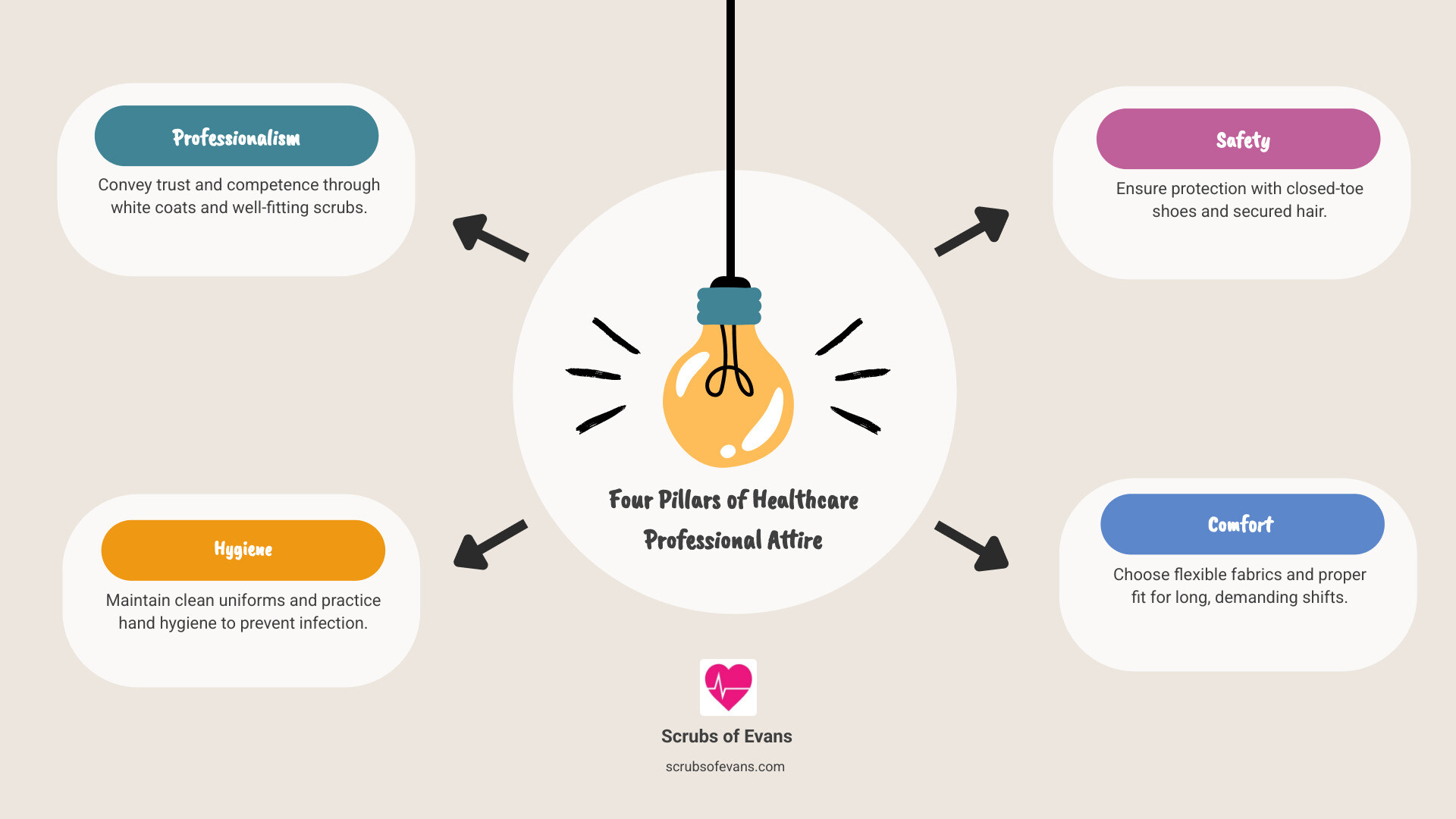
Healthcare Professional Attire: 4 Pillars for Success
Why Healthcare Professional Attire Matters More Than You Think
Healthcare professional attire is a cornerstone of trust, safety, and professionalism in medical settings. Research shows 53% of patients consider a doctor’s attire important, and studies reveal scrubs are rated significantly higher than formal office wear in patient perception.
Key Components of Professional Healthcare Attire:
- Scrubs: Clean, well-fitting, and appropriate for your department
- Lab coats/White coats: Professional symbol requiring frequent laundering
- Footwear: Closed-toe, non-slip, comfortable for long shifts
- Grooming: Neat hair (secured away from face), minimal jewelry, short nails
- Hygiene standards: Daily uniform changes, “Bare-Below-the-Elbows” practices
- Role identification: Color-coded uniforms, clear name tags with credentials
Your attire communicates professionalism, competence, and trustworthiness before you speak. It’s also critical for infection control, as studies show up to 16% of white coats test positive for MRSA and 42% for gram-negative bacteria if not properly maintained.
While the choice between scrubs and formal wear varies, research consistently shows that patients prefer physicians in scrubs, rating them higher in professionalism (7.52 vs. 6.69), friendliness (7.54 vs. 6.87), aptitude (7.44 vs. 6.72), and empathy (7.36 vs. 6.71).
I’m Mark Harrell, and I’ve been helping healthcare professionals find the perfect uniforms through Scrubs of Evans for over 16 years. My experience in the CSRA healthcare community has shown me how the right healthcare professional attire can boost confidence, improve patient relationships, and support the demanding nature of medical work.
The Impact of Healthcare Professional Attire: Perception, Safety, and Trust

Your healthcare professional attire is more than just a uniform; it’s a silent partner that builds patient trust, ensures safety, and boosts your confidence. Before you even speak, your attire communicates professionalism, cleanliness, and trustworthiness, shaping a patient’s first impression of your competence.
How Attire Influences Patient Trust and Confidence
Patients’ perceptions are strongly influenced by a provider’s attire, even if they claim it doesn’t matter. Recent research on patient preferences shows physicians in scrubs are rated significantly higher than those in formal wear across every category. Professionalism scores jump from 6.69 to 7.52, friendliness from 6.87 to 7.54, and empathy from 6.71 to 7.36.
This preference for scrubs makes sense, as they signal a hands-on, approachable provider focused on patient care. The impact is significant for female physicians, who are often rated lower in professionalism than male colleagues when wearing formal attire. This perception gap disappears when both genders wear scrubs.
Your first impression is lasting. Clean, well-fitting scrubs from quality brands signal professionalism. In contrast, wrinkled or ill-fitting attire can make patients question your quality of care. Facilities enforce dress codes for good reason, and following these guidelines helps you build rapport and create a comfortable environment for patients.
Scientific research on patient preferences for physician attire
The Critical Role of Hygiene in Healthcare Professional Attire
Let’s discuss contamination. Your healthcare professional attire is constantly exposed to pathogens. Studies find up to 16% of white coats test positive for MRSA and 42% for gram-negative bacteria. The potential for clothing to contribute to pathogen transmission is a real concern.
This is why hygiene standards are so strict. The “Bare-Below-the-Elbows” policy is based on infection control principles, eliminating surfaces for bacteria and improving hand hygiene. Laundering practices are also crucial. Wash scrubs after every shift using hot water and a hot dryer to kill bacteria. White coat contamination is a key concern, so follow strict cleaning protocols.
Beyond your uniform, your stethoscope, ID badge, and phone also harbor bacteria and need regular disinfection. Infection control is a complete system where every component matters.
Scientific research on attire contamination and pathogen transmission
Balancing Functionality, Comfort, and Personal Expression

Your uniform must work as hard as you do. Long shifts and emergencies demand scrubs that won’t hold you back. Range of motion is crucial, which is why modern scrubs use flexible fabrics that move with you.
Breathable materials and moisture-wicking properties are essential for comfort during demanding shifts. Strategically placed pockets are vital for keeping tools within easy reach. The right fit is also critical; loose scrubs can snag, while tight ones restrict movement. At Scrubs of Evans, we help you find that perfect fit.
Personal expression within professional guidelines boosts confidence. Color-coded uniforms help identify roles, but you can still choose styles that reflect your personality. Workers in pediatrics may wear fun prints, while those in the ICU might prefer subdued colors. The key is to understand your facility’s policies and find comfort within them.
When you feel good in your scrubs, it shows. Patients pick up on confidence, and comfortable, well-fitting uniforms help you project the professional image that builds trust.
A Practical Guide to Your Healthcare Wardrobe
Navigating your healthcare wardrobe is simpler than you think but crucial for success. Understanding the basics of healthcare professional attire sets a professional tone from day one. Key principles apply almost everywhere:
- Cleanliness: Always wear a clean, wrinkle-free uniform.
- Fit: Ensure a proper fit that allows movement without being too loose or tight.
- Footwear: Closed-toe, slip-resistant shoes are essential for safety.
- Grooming: Keep hair secured and away from your face.
- Fragrance: Use minimal or no fragrance to avoid triggering patient sensitivities.
- Hygiene: Wash uniforms after every shift to prevent cross-contamination.
Adhering to your facility’s dress code is mandatory, as violations can lead to disciplinary action.
Dress Code Recommendations for Different Healthcare Roles
Your healthcare professional attire depends on your role, department, and facility.
- Physicians: While the white coat over business casual is traditional in offices, scrubs are increasingly popular, especially in hospitals. Scrubs are practical, easy to clean, and preferred by patients.
- Nurses & Nursing Assistants: Scrubs are the standard for their comfort, function, and professional look. Many hospitals use color-coded scrubs to help identify roles.
- Allied Health Professionals: Professionals like physical and occupational therapists often wear scrubs due to the active nature of their work. The key is to choose attire that is functional while maintaining a professional appearance.
At Scrubs of Evans, we know the right uniform boosts confidence and comfort. That’s why we offer high-quality scrubs designed for the unique challenges of healthcare.
Beyond the Uniform: Essential Guidelines for Healthcare Professional Attire
Beyond the uniform, other details of your appearance impact your professional image and patient safety.
- Footwear: Closed-toe, slip-resistant shoes are mandatory. Quality, supportive footwear is an investment in your well-being and career longevity.
- Hair and Grooming: Secured hair prevents contamination. Short, clean fingernails are critical for infection control, as artificial nails and polish are often prohibited.
- Jewelry and Accessories: Less is more. Simple jewelry is usually acceptable, but dangling items are a safety and hygiene risk. Your ID badge must be prominently displayed.
- Tattoos and Piercings: Policies vary, so check your facility’s guidelines. Tattoos are often more accepted if non-offensive, but facial piercings may be restricted.
- Fragrances: Be mindful of perfumes, as they can trigger sensitivities in patients and colleagues. A neutral scent is safest.
These guidelines exist to keep you safe, maintain professional standards, and ensure quality patient care. Looking and feeling professional in your healthcare professional attire positively impacts the care you provide.
Conclusion: Dressing for Success in Your Healthcare Career
Your healthcare professional attire communicates professionalism and competence before you speak. As we’ve seen, the right attire, like scrubs, boosts patient confidence, while proper uniform hygiene is a critical defense against infection.
The research is clear: patients feel more confident with professionals in scrubs, rating them higher in professionalism, friendliness, and empathy. A professional appearance builds trust.
Beyond perception, your uniform must be functional. During long shifts, your healthcare professional attire must support you. The right fit, breathable fabrics, and durable construction are essential for performance and comfort.
At Scrubs of Evans, we’ve served the CSRA healthcare community since 2008. We understand your daily demands, which is why we offer high-quality, durable, and comfortable scrubs from top brands.
When you feel confident and comfortable in what you’re wearing, it shows. Your patients and colleagues notice, and you can focus on what you do best: caring for others.
Whether you’re outfitting yourself or your entire team, we’re here to help. Our group programs offer specialized solutions and pricing for healthcare facilities.
Ready to experience the difference that properly fitting, high-quality scrubs can make? Visit us to learn more info about our group scrub programs. Because when you dress for success, everyone wins—you, your team, and most importantly, your patients.